

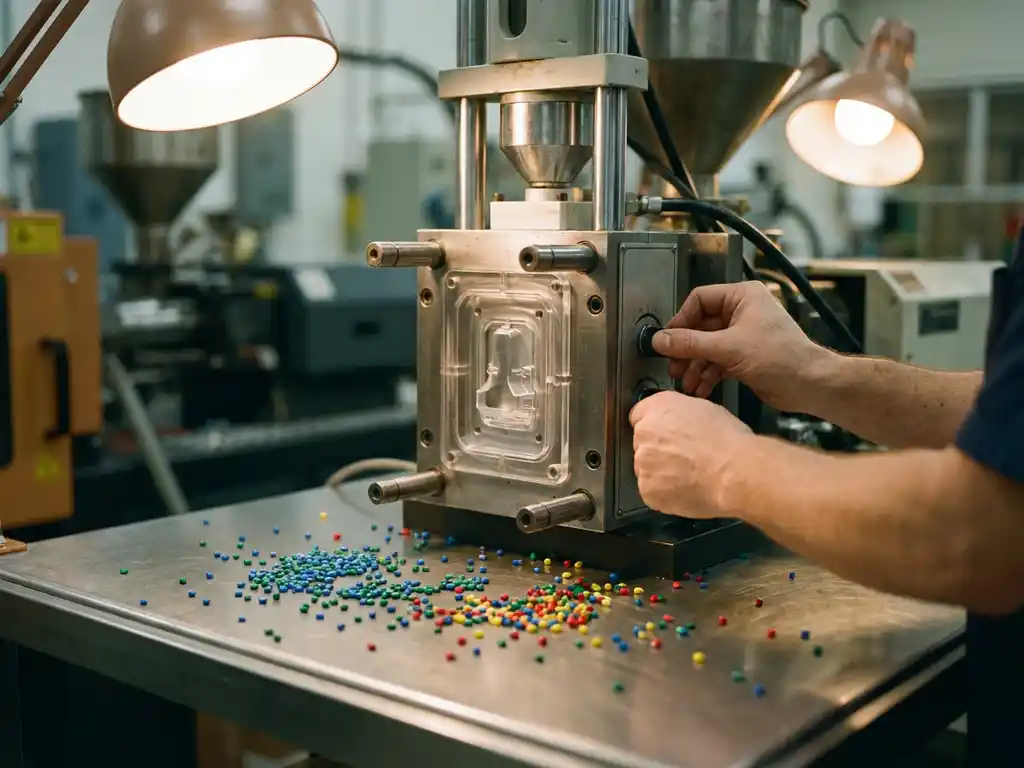
Adapting injection molding for small-batch production requires addressing traditional limitations through quick mold-change systems, flexible tooling strategies, and careful cost analysis. Modern solutions can reduce changeover times from hours to minutes, making smaller production runs economically viable. Success depends on optimizing setup efficiency, selecting appropriate tooling approaches, and calculating accurate break-even points to ensure profitability.
What makes injection molding challenging for small batch production?
Traditional injection molding faces significant barriers to small-batch production due to lengthy setup times and high tooling costs that require large volumes to justify the investment. Conventional systems can take 2–8 hours for mold changes, making frequent transitions between different parts economically unfeasible for smaller quantities.
The primary challenge lies in equipment designed for high-volume manufacturing. Standard injection molding machines prioritize continuous production runs rather than flexibility. Setup procedures involve manual mold installation, complex coupling connections, and extensive adjustments that consume valuable production time.
Economic barriers compound these operational challenges. High-volume production spreads tooling costs across thousands of parts, whereas small batches must absorb these expenses over fewer units. This creates a cost-per-part disadvantage that makes small-batch injection molding optimization difficult without strategic changes to the production approach.
Labor requirements further complicate small-batch economics. Extended changeover periods require skilled technicians, increasing labor costs per part. These factors combine to create a manufacturing environment in which small batches become unprofitable using traditional injection molding methods.
How do quick mold change systems transform small batch efficiency?
Quick mold-change systems dramatically reduce changeover times from hours to minutes through automated clamping and coupling solutions. These systems eliminate manual mold handling and complex setup procedures, enabling rapid transitions between different production runs without compromising quality or safety.
The technology centers on standardized clamping systems that secure molds consistently and reliably. Automated coupling solutions connect utilities such as cooling lines, ejector systems, and electrical connections simultaneously. This integration reduces human error while significantly accelerating the changeover process.
Advanced quick mold-change systems include transport vehicles and positioning equipment that move molds efficiently between storage and production areas. Some systems incorporate mold-preheating capabilities, ensuring optimal operating temperatures are reached quickly after installation.
These improvements transform the economics of small-batch production by reducing unproductive downtime. When changeovers take 15–30 minutes instead of several hours, manufacturers can economically produce smaller quantities while maintaining competitive pricing and delivery schedules.
What tooling strategies work best for flexible small batch production?
Modular tooling approaches and family molds provide the most effective strategies for small-batch injection molding by maximizing tooling investment flexibility while accommodating various part designs within shared systems. These approaches reduce per-part tooling costs through intelligent design consolidation.
Family molds allow multiple part designs to be produced simultaneously or through quick cavity changes. This strategy works particularly well when parts share similar materials, wall thicknesses, and quality requirements. The approach spreads tooling costs across multiple part numbers while maintaining production efficiency.
Multi-cavity solutions with removable inserts offer another flexible approach. Base molds accommodate different cavity inserts, allowing part design changes without complete tooling replacement. This modular concept reduces inventory requirements while providing design flexibility for evolving product lines.
Investment strategies should balance initial tooling costs with long-term flexibility requirements. Consider aluminum tooling for prototype and low-volume production, transitioning to steel tooling only when volumes justify the investment. This phased approach manages cash flow while progressively building production capability.
How do you calculate the break-even point for small batch injection molding?
Break-even calculations must include setup time costs, material usage, labor, and tooling amortization to determine when small-batch production becomes economically viable. The analysis compares total production costs against alternative manufacturing methods or outsourcing options.
Setup time represents a major cost component that must be amortized across batch quantities. Calculate hourly machine rates, including labor, utilities, and overhead. Multiply by actual changeover time to determine setup cost per batch. Divide by batch quantity to establish setup cost per part.
Material costs include resin, colorants, and processing aids, plus waste from startup and purging between material changes. Small batches typically generate higher waste percentages due to more frequent material transitions and color changes.
Tooling amortization depends on expected part volumes over the tool’s life. Conservative estimates prevent overly optimistic projections that can lead to unprofitable pricing. Include maintenance costs and potential design changes that might require tooling modifications.
The framework should compare total cost per part against selling prices and profit-margin requirements. Factor in quality costs, inventory carrying costs, and the customer-service benefits that small-batch capability provides. This comprehensive analysis reveals the true economic impact of flexible production capabilities.
How EAS Change Systems helps with small-batch injection molding
EAS Change Systems provides comprehensive solutions that transform small-batch injection molding economics through rapid mold-change technology and flexible production systems. Our solutions address the core challenges manufacturers face when adapting to smaller production runs:
• Quick mold-change systems that reduce changeover times from hours to 15-30 minutes
• Automated clamping and coupling technology that eliminates manual handling and setup errors
• Modular tooling solutions that maximize flexibility while controlling costs
• Integrated transport systems for efficient mold handling and storage
• Expert consultation on break-even analysis and production optimization
Ready to transform your injection molding operations for small-batch efficiency? Contact EAS Change Systems today to discover how our proven solutions can reduce your changeover times, lower production costs, and unlock new market opportunities through flexible manufacturing capabilities.