

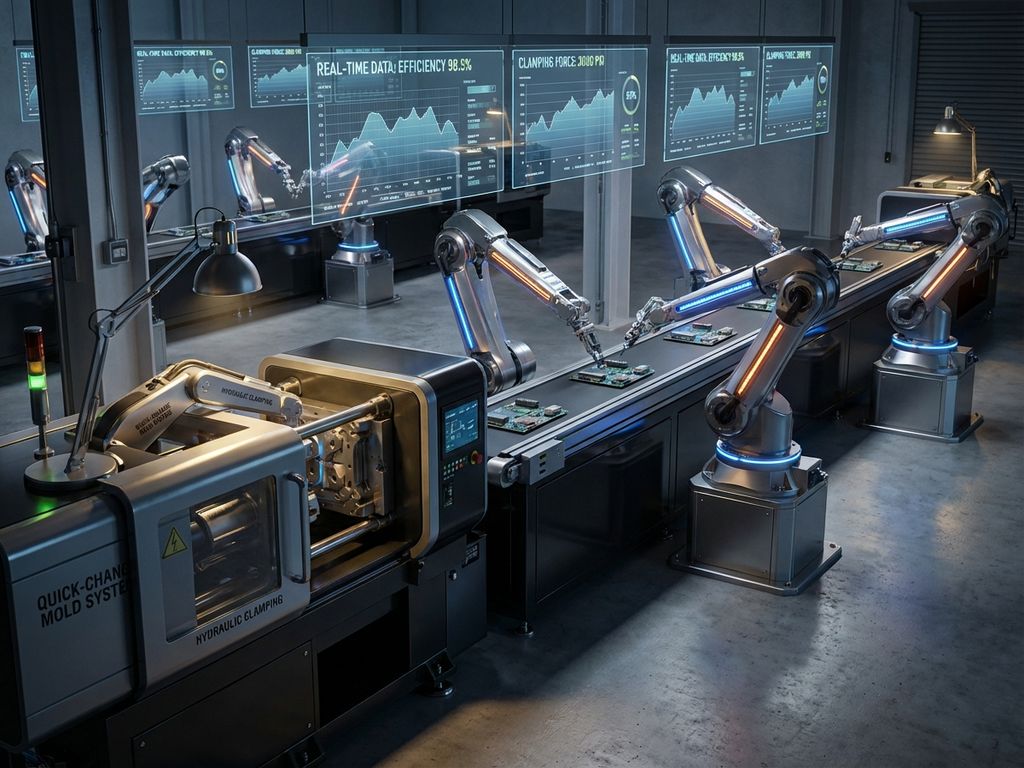
Manufacturing automation encompasses the use of technology, machinery, and control systems to execute production tasks with minimal human intervention. It transforms traditional manual processes into streamlined and technology-driven operations that increase efficiency, reduce costs, and improve quality. This comprehensive guide answers the most common questions about implementing automation in manufacturing environments.
What does it mean to automate manufacturing processes?
Manufacturing automation replaces manual labor with technology-driven systems that automatically control production processes. It encompasses robotics, computer-controlled machines, sensors, and software that work together to execute manufacturing tasks with minimal human oversight.
Essentially, manufacturing automation transforms how products are made by integrating intelligent technology throughout the entire production line. Automated systems can monitor quality, adjust parameters, handle materials, and coordinate complex operations without constant human supervision. This includes everything from simple conveyor belts that move components to sophisticated robotic arms that perform precise assembly tasks.
The technological foundation includes programmable logic controllers (PLCs), human-machine interfaces (HMI), sensors for real-time monitoring, and enterprise software that connects all systems. These components continuously communicate, share data, and adjust operations to maintain optimal performance. Modern automation also integrates artificial intelligence and machine learning to predict maintenance needs and optimize production schedules.
The integration of intelligent technology enables manufacturers to create responsive production environments that adapt to changing conditions. Automated systems can instantly detect quality issues, adjust machine settings for different products, and coordinate with supply chain systems to ensure materials arrive exactly when needed.
Why should manufacturers consider automating their production processes?
Manufacturers benefit from automation through increased efficiency, reduced labor costs, better quality control, enhanced safety, and stronger competitive positioning. Automated systems operate continuously without breaks, deliver consistent results, and free human workers for higher-value activities that require creativity and problem-solving skills.
The efficiency gains are substantial, as automated systems work faster and more consistently than manual processes. Machines don’t experience fatigue, don’t take breaks, and don’t make errors due to distraction. This reliability leads to higher productivity and more predictable production schedules that improve customer satisfaction.
Quality improvements occur because automated systems maintain precise control over process parameters. Sensors continuously monitor dimensions, temperatures, pressures, and other critical factors, making immediate adjustments when deviations are detected. This consistency reduces error rates and minimizes waste from defective products.
Safety benefits emerge when dangerous tasks are transferred from human workers to machines. Automated systems can operate in hazardous environments, handle toxic materials, and perform repetitive motions that could cause injuries over time. This protection reduces workplace accidents and associated costs while improving employee satisfaction.
Return on investment typically becomes visible within two to five years, depending on implementation complexity and current labor costs. Long-term benefits include reduced operating costs, better scalability, and increased ability to respond quickly to market demands.
What are the different types of manufacturing automation systems?
Manufacturing automation divides into three main categories: rigid automation for standardized high-volume production, programmable automation for batch production with product variations, and flexible automation systems that quickly adapt to different products and requirements.
Rigid automation systems are designed for specific tasks and high-volume production cycles. These systems include dedicated assembly lines, transfer machines, and specialized equipment that repeatedly perform the same operations. While they offer the lowest unit costs for large volumes, they lack flexibility for product changes.
Programmable automation enables product variations through software changes rather than hardware modifications. Computer numerical control machines (CNC), industrial robots with programmable controllers, and automated guided vehicles fall into this category. These systems balance efficiency with flexibility, suitable for medium production volumes with periodic product changes.
Flexible automation systems represent the most advanced approach, capable of handling multiple products simultaneously and switching between them quickly. These systems include flexible manufacturing cells, adaptive robotics with vision systems, and integrated production lines controlled by sophisticated software. They excel in environments requiring frequent product changeovers or customizations across various manufacturing applications.
Supporting technologies include transport systems for material handling, automated quality control equipment with visual inspection, and intelligent manufacturing platforms that coordinate all automation components. Each type serves different production requirements and investment capacities.
How do you identify which manufacturing processes to automate first?
Prioritize automation opportunities by evaluating processes with high labor costs, repetitive tasks, quality control challenges, or safety risks. Conduct cost-benefit analyses comparing automation investments with current operating costs, considering implementation complexity and potential return on investment.
Start with comprehensive process assessment that maps current operations, identifies bottlenecks, and quantifies labor requirements for each production stage. Look for processes where human workers perform repetitive motions, frequently handle materials, or require precise measurements that could benefit from consistent automated execution.
High-impact opportunities typically include material handling, assembly operations, packaging, and quality inspection tasks. These processes often involve significant labor costs and benefit immediately from automation’s speed and consistency. Evaluate current error rates, rework costs, and time spent on each process to understand potential improvements.
Consider your automation roadmap by starting with simpler implementations that deliver quick wins and build confidence. Successful initial projects provide learning experiences and demonstrate value to stakeholders, making it easier to gain support for more complex automation initiatives.
Assessment criteria should include current process costs, expected savings through automation, implementation timeline, technical complexity, and impact on other operations. Prioritize processes where automation delivers measurable benefits within reasonable payback periods while supporting broader production goals.
What challenges do manufacturers face when implementing automation?
Common automation challenges include significant initial investment costs, personnel training requirements, system integration complexity, technology selection decisions, and change management throughout the organization. These obstacles require careful planning, adequate resources, and leadership commitment to overcome successfully.
Initial investment costs often present the biggest obstacle, especially for smaller manufacturers. Automation projects require capital for equipment, installation, programming, and testing before generating returns. Many manufacturers struggle to justify these upfront costs against uncertain future benefits, particularly when current operations appear profitable.
Personnel training becomes critical as automated systems require different skills than manual processes. Employees need training to operate, monitor, and maintain new equipment. Some workers may resist changes, fearing job loss or inability to adapt to new technological requirements.
System integration complexity increases when connecting new automation equipment with existing machinery, software systems, and production processes. Compatibility issues, communication protocols, and data synchronization challenges can delay implementation and increase costs beyond original estimates.
Mitigation strategies include phased implementation approaches that spread costs over time, comprehensive training programs that prepare workers for new roles, and partnerships with experienced automation providers who understand integration challenges. Successful implementations require realistic timelines, adequate budgets for unforeseen issues, and strong project management throughout the process.
How do EAS change systems help with manufacturing automation?
We provide comprehensive automation solutions that drastically reduce changeover times and streamline production processes through advanced Quick Mold Change (QMC) and Quick Die Change (QDC) systems. Our technology transforms time-consuming manual changeover operations into efficient automated processes completed in minutes rather than hours.
Our automation solutions include:
- Adaptive clamping systems that automatically secure molds and tools with precise and repeatable positioning
- Automated ejector couplings and multi-coupling systems that connect service lines without manual intervention
- Robotic mold change tables and transport vehicles that move heavy tooling safely and efficiently
- Integrated inspection and turning units that automatically verify correct configuration
- Complete turnkey automation systems with project management and installation support
These solutions provide immediate benefits including changeover time reduction by up to 90%, elimination of manual handling risks, consistent changeover quality, and increased machine utilization. Our systems integrate seamlessly with existing production lines and can be customized for specific manufacturing requirements.
Ready to automate your manufacturing processes and reduce changeover times? Contact us today to discuss how our proven automation solutions can transform your production efficiency and competitiveness.
