

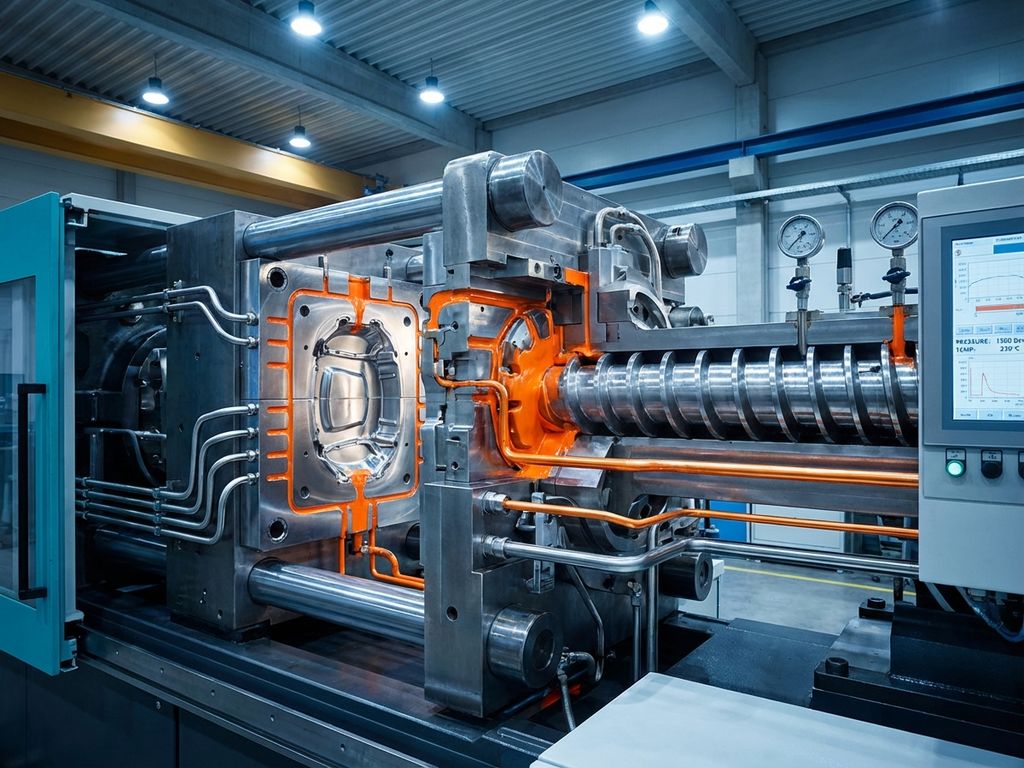
Process optimization in injection molding is the systematic improvement of manufacturing operations to reduce cycle times, enhance quality, minimize waste, and increase cost efficiency. It involves analyzing every aspect of production, from setup procedures to material handling, identifying bottlenecks, and implementing targeted solutions. Effective injection molding optimization can transform lengthy changeovers from hours to minutes while significantly improving overall production profitability.
What is process optimization in injection molding and why does it matter?
Process optimization in injection molding refers to the systematic enhancement of manufacturing operations to achieve maximum efficiency, quality, and profitability. It encompasses cycle time reduction, quality improvement, waste minimization, and cost control through strategic analysis and implementation of targeted improvements.
The core areas of injection molding optimization include reducing setup times, improving material utilization, enhancing quality consistency, and streamlining workflow coordination. These improvements directly impact production capacity, allowing manufacturers to produce more parts with fewer resources while maintaining or improving quality standards.
For manufacturers in competitive markets, process optimization becomes critical for survival and growth. Companies that fail to optimize their operations face higher production costs, longer lead times, and reduced flexibility in responding to market demands. The compounding effect of inefficiencies can quickly erode profit margins and competitive positioning.
The financial impact extends beyond immediate cost savings. Optimized processes enable manufacturers to accept smaller batch orders profitably, respond quickly to customer demands, and maintain consistent delivery schedules. This flexibility often translates into stronger customer relationships and increased market share.
What are the main bottlenecks that slow down injection molding processes?
The primary bottlenecks in injection molding operations include lengthy mold changeovers, inconsistent setup procedures, material waste, quality control issues, unplanned machine downtime, and poor workflow coordination between operators and departments.
Mold changeover times represent one of the most significant inefficiencies in many facilities. Traditional changeover processes can take several hours, during which expensive machinery sits idle. This extended downtime becomes particularly costly when frequent product changes are required to meet diverse customer demands.
Material-related bottlenecks occur through improper handling, contamination, or inefficient purging procedures between color or material changes. These issues not only waste expensive raw materials but also create quality problems that require additional time to resolve.
Quality inconsistencies compound production delays by requiring rework, additional inspection time, and potential customer complaints. Poor process control leads to variations in part dimensions, surface finish, or material properties that may not be detected until significant quantities have been produced.
Machine downtime from preventable maintenance issues or operator errors creates cascading delays throughout the production schedule. When combined with inadequate workflow coordination, these bottlenecks can reduce overall equipment effectiveness by 30% or more.
How do you reduce setup times in injection molding operations?
Reducing setup times requires standardizing changeover procedures, implementing preparation techniques, training operators thoroughly, and adopting quick-change tooling systems. The most effective approach combines immediate procedural improvements with systematic long-term investments in equipment and training.
Standardization forms the foundation of setup time reduction. Document every step of the changeover process, identify unnecessary movements or delays, and create detailed procedures that any qualified operator can follow consistently. This eliminates guesswork and reduces variability between different operators or shifts.
Preparation techniques involve completing as many changeover tasks as possible while the machine continues running the previous job. This includes gathering tools, preparing materials, checking mold conditions, and staging everything needed for the changeover. External preparation can reduce actual machine downtime by 50% or more.
Operator training ensures consistent execution of optimized procedures while building confidence and competence. Well-trained operators make fewer mistakes, work more efficiently, and can identify potential problems before they cause delays.
Quick-change tooling systems represent the most significant long-term improvement opportunity. These systems eliminate manual bolt tightening, reduce alignment time, and enable consistent clamping forces. The investment in quick-change technology typically pays for itself through reduced labor costs and increased machine utilization.
What technologies help optimize injection molding processes?
Modern injection molding optimization relies on automated changeover systems, real-time process monitoring, predictive maintenance technologies, advanced process control systems, and integrated quick mold change solutions that work together to create comprehensive efficiency improvements.
Automated changeover systems reduce human error while accelerating the transition between different products. These systems can automatically adjust machine parameters, position components precisely, and verify proper setup before production begins. The consistency achieved through automation often improves quality while reducing setup times.
Real-time monitoring systems track key process parameters continuously, alerting operators to deviations before they create quality problems or equipment damage. This proactive approach prevents costly production runs of defective parts while extending equipment life through better process control.
Predictive maintenance technologies use sensors and data analysis to identify potential equipment failures before they occur. This approach minimizes unplanned downtime while optimizing maintenance schedules to avoid unnecessary interventions.
Advanced process control systems automatically adjust parameters to maintain optimal conditions despite variations in material properties, ambient conditions, or equipment wear. These systems reduce operator workload while improving consistency and reducing waste. Manufacturers seeking to implement these optimization applications must carefully evaluate which technologies align best with their specific production requirements.
The integration of these technologies creates synergistic benefits that exceed the sum of individual improvements. Data from monitoring systems informs predictive maintenance algorithms, while process control systems use real-time feedback to optimize performance continuously.
How do EAS change systems help with injection molding process optimization?
EAS change systems provide comprehensive quick mold change solutions that address the primary bottlenecks in injection molding operations through automated clamping systems, standardized procedures, and turnkey optimization packages that reduce changeover times from hours to minutes.
Our quick mold change products deliver both immediate and long-term benefits through:
- Adaptive clamping systems that eliminate manual bolt tightening and ensure consistent, optimal clamping forces
- Automated ejector couplers and multi-coupler systems that connect utilities quickly and reliably
- Mold change tables and transportation vehicles that streamline material handling
- Inspection and tilting units that improve safety and reduce setup complexity
- Comprehensive training and support to ensure optimal system utilization
The implementation approach includes detailed ROI calculations, application engineering support, professional installation, and ongoing service to maximize your investment returns. Our systems integrate seamlessly with existing equipment while providing the foundation for continuous improvement.
Transform your injection molding operations with proven quick mold change technology. Contact us today to discuss how EAS change systems can optimize your specific production requirements and deliver measurable improvements in efficiency and profitability.