
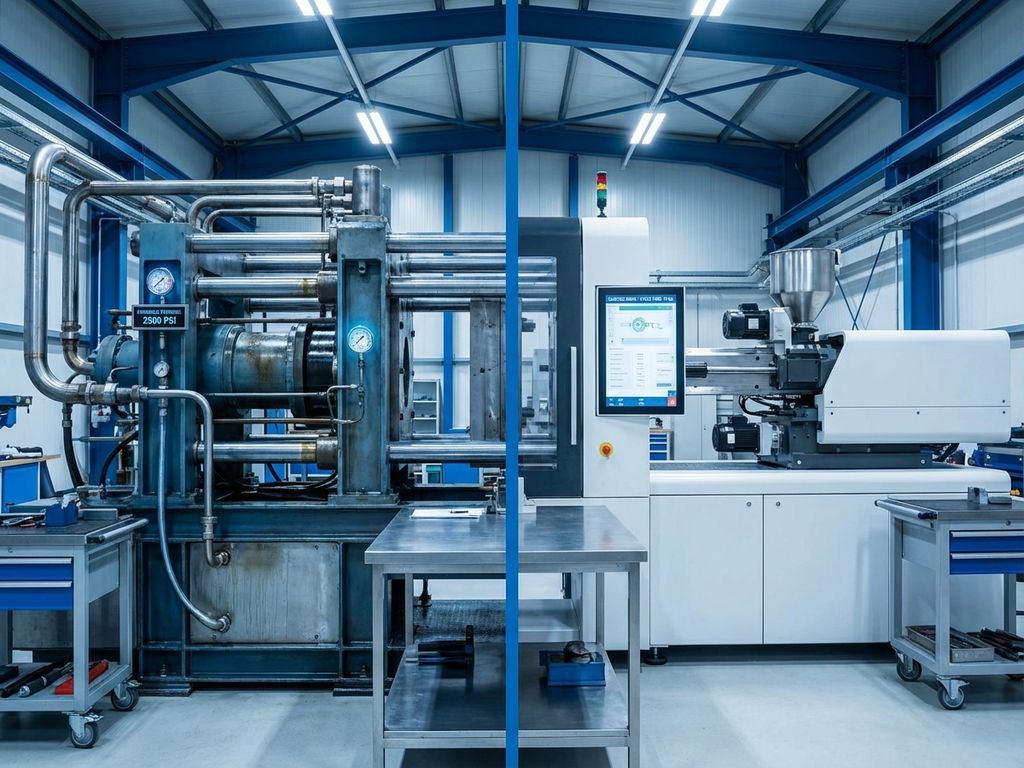
Hydraulic injection molding machines use fluid power systems to operate, while electric machines rely on servo motors for precise control. Hydraulic systems offer higher clamping forces and lower initial costs, making them suitable for large parts and high-volume production. Electric machines provide superior precision, energy efficiency, and cleaner operation, making them ideal for precision components and medical applications.
What are the key differences between hydraulic and electric injection molding machines?
Hydraulic injection molding machines operate using pressurized fluid to power the clamping, injection, and ejection systems. They generate substantial clamping forces through hydraulic cylinders and pumps, making them excellent for processing large parts that require significant holding pressure during the cooling phase.
Electric injection molding machines utilize servo motor technology to control all machine functions. These motors provide precise positioning and speed control throughout the injection molding cycle. The electric drive system eliminates the need for hydraulic oil, pumps, and related components.
The fundamental operational differences include:
- Power transmission method (fluid pressure versus electric motors)
- Response time and control precision capabilities
- Maintenance requirements and complexity
- Environmental impact and cleanliness standards
Electric machines typically operate more quietly and produce less heat during operation. They also offer better repeatability for shot-to-shot consistency, which is crucial for precision applications requiring tight tolerances.
Which type of injection molding machine offers better precision and control?
Electric injection molding machines deliver superior precision and control compared to hydraulic systems. The servo motor technology enables exact positioning, consistent speeds, and repeatable movements throughout each molding cycle. This precision translates directly into better part quality and dimensional accuracy.
The closed-loop control systems in electric machines monitor and adjust parameters in real time. This continuous feedback ensures consistent injection speeds, pressures, and positions, resulting in minimal variation between parts. Electric machines can typically achieve positioning accuracy within 0.01 mm.
Hydraulic systems, while powerful, inherently have some variability due to:
- Oil temperature fluctuations affecting viscosity
- Pressure variations in the hydraulic system
- Wear in hydraulic components over time
- Response delays in valve operations
Electric machines also provide better process monitoring capabilities. Advanced control systems can track and record detailed cycle data, enabling manufacturers to identify trends and optimize processing parameters more effectively.
How do operating costs compare between hydraulic and electric injection molding machines?
Electric injection molding machines typically have lower operating costs despite higher initial purchase prices. Energy consumption represents the most significant difference, with electric machines using 20–50% less energy than comparable hydraulic systems. This efficiency stems from motors consuming power only when active, unlike hydraulic pumps that run continuously.
Maintenance costs favor electric machines due to fewer moving parts and no hydraulic fluid requirements. Hydraulic systems require regular oil changes, filter replacements, and seal maintenance. Electric machines primarily need periodic motor servicing and basic mechanical maintenance.
Key cost considerations include:
- Energy consumption during production cycles
- Hydraulic oil purchase and disposal costs
- Preventive maintenance schedules and parts
- Downtime frequency and duration
- Environmental compliance and waste management
Electric machines often achieve faster cycle times due to precise control and rapid acceleration and deceleration capabilities. This increased productivity can offset higher equipment costs through improved output and reduced per-part manufacturing costs.
What factors should manufacturers consider when choosing between hydraulic and electric machines?
Part size and complexity are primary selection criteria. Large, thick-walled parts requiring high clamping forces often suit hydraulic machines better, while precision components with tight tolerances benefit from electric machine capabilities. Production volume, quality requirements, and available floor space also influence the decision.
Manufacturing environment considerations include noise levels, cleanliness requirements, and energy costs. Cleanroom applications typically require electric machines due to their oil-free operation and reduced contamination risk. Facilities with noise restrictions also favor quieter electric systems.
Financial factors to evaluate include:
- Initial capital investment and financing options
- Projected energy costs over the machine’s lifetime
- Maintenance budget and staff capabilities
- Expected return-on-investment timeline
- Resale value and depreciation rates
Technical requirements such as shot size, injection pressure, and cycle time specifications help determine which technology better matches production needs. Consider future production plans and potential part-mix changes when making long-term equipment decisions.
How do EAS change systems enhance both hydraulic and electric injection molding efficiency?
We provide advanced quick mold change solutions that dramatically reduce changeover times for both hydraulic and electric injection molding machines. Our systems enable mold changes in minutes rather than hours, regardless of the machine type, maximizing production efficiency and reducing setup-related downtime.
Our comprehensive solutions include:
- Adaptive clamping systems that work with any machine configuration
- Ejector couplers for rapid connection and disconnection
- Mold change tables and transportation vehicles for safe handling
- Multi-coupler systems for simultaneous utility connections
- Inspection and mold-tilting units for quality assurance
The quick-change technology integrates seamlessly with both hydraulic and electric machines, allowing manufacturers to optimize run sizes and reduce scrap regardless of their equipment choice. Our systems help achieve faster changeovers, improved safety, and consistent mold positioning across different machine types.
Contact us today to discover how our quick mold change solutions can enhance your injection molding operations, whether you’re running hydraulic or electric machines.