

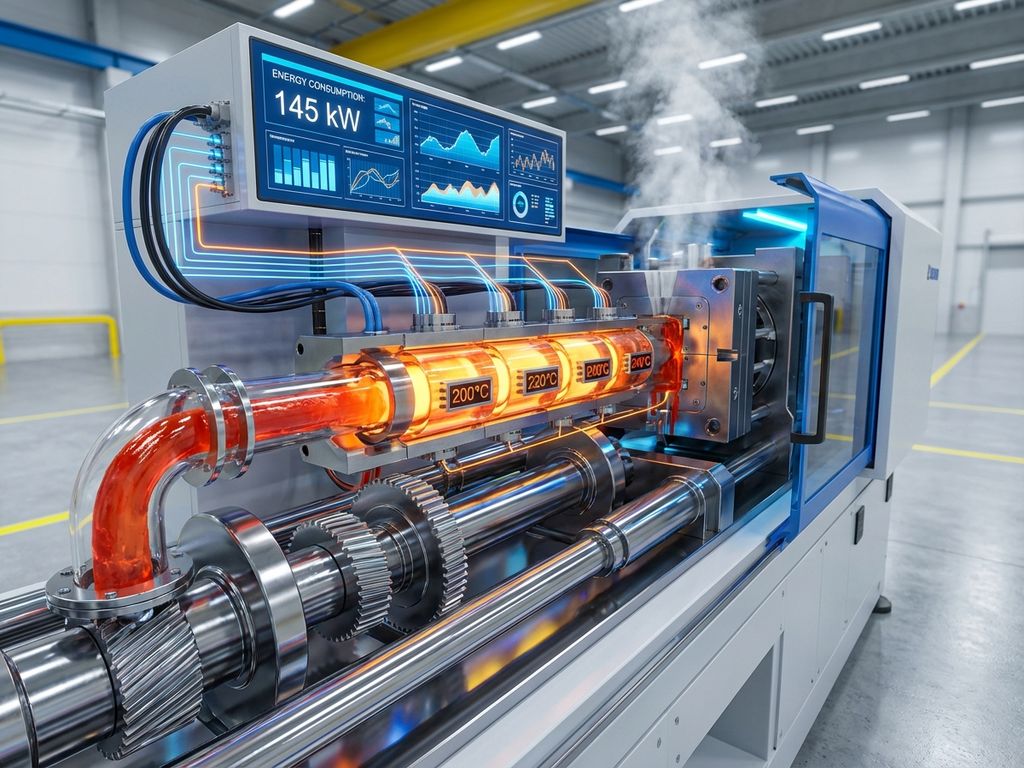
Injection molding energy consumption refers to the total electrical power required to operate injection molding machines and related equipment during the manufacturing process. Energy costs typically represent 20–30% of total production expenses, making consumption management crucial for profitability. Understanding and optimizing energy usage directly impacts manufacturing costs, environmental sustainability, and operational efficiency across production facilities.
What is injection molding energy consumption and why does it matter?
Injection molding energy consumption encompasses all electrical power used during the plastic manufacturing process, including heating, cooling, hydraulic systems, and machine operation. This energy usage directly affects production costs, environmental impact, and manufacturing competitiveness in today’s market.
Energy consumption matters because it represents one of the largest controllable costs in injection molding operations. Rising electricity prices and environmental regulations make energy efficiency increasingly important for maintaining profitable operations. Manufacturers who optimize energy usage gain competitive advantages through lower production costs and reduced carbon footprints.
The significance extends beyond immediate cost savings. Energy-efficient operations improve equipment longevity, reduce maintenance requirements, and enhance overall production reliability. Companies focusing on energy optimization often discover additional benefits, including improved product quality and faster cycle times.
What are the biggest energy drains in injection molding operations?
The heating system consumes the largest portion of energy in injection molding, typically accounting for 40–60% of total machine power usage. Barrel heaters, nozzle heaters, and hot runner systems require continuous energy to maintain proper plastic temperatures throughout the molding process.
Hydraulic systems represent another major energy drain, especially in older machines. These systems maintain constant pressure even during idle periods, consuming significant power without productive output. The hydraulic pump motor runs continuously to maintain system pressure, regardless of actual molding activity.
Cooling systems also consume substantial energy, particularly in facilities with inadequate temperature control. Inefficient cooling extends cycle times and increases overall energy consumption per part produced. Machine setup and changeover periods contribute additional energy waste through extended heating and preparation cycles.
How much energy does a typical injection molding machine actually use?
A standard 100-ton injection molding machine typically consumes 15–25 kWh per hour during active production. Larger machines proportionally increase consumption, with 500-ton machines using 50–80 kWh per hour. Energy usage varies significantly based on material type, part complexity, and cycle time requirements.
Machine utilization patterns greatly affect actual energy consumption. During production, machines operate at peak efficiency, but setup periods, changeovers, and idle time increase per-part energy costs. A machine running continuously uses energy more efficiently than one with frequent stops and starts.
Annual energy costs for a single machine range from £15,000 to £50,000, depending on size, utilization, and local electricity rates. Production efficiency improvements can reduce these costs by 20–40% without compromising output quality or quantity.
What factors increase injection molding energy consumption the most?
Extended setup and changeover times dramatically increase energy consumption per part produced. Machines continue consuming power during tool changes, material switches, and process adjustments without generating productive output. Longer changeovers mean higher energy costs distributed across fewer parts.
Poor process optimization leads to increased energy waste through longer cycle times, excessive heating, and inefficient cooling. Inadequate temperature control requires additional energy to maintain proper conditions, while suboptimal processing parameters extend production cycles unnecessarily.
Equipment age and maintenance status significantly impact energy efficiency. Older hydraulic systems consume more power than modern electric alternatives. Poor maintenance allows energy losses through worn seals, inefficient pumps, and degraded insulation around heating elements.
Frequent production interruptions increase energy consumption through repeated startup sequences and temperature recovery cycles. Each interruption requires additional energy to restore optimal operating conditions.
How can manufacturers reduce injection molding energy consumption?
Implementing predictive maintenance programs reduces energy waste from inefficient equipment operation. Regular maintenance ensures hydraulic systems, heating elements, and cooling circuits operate at peak efficiency. Well-maintained machines consume less energy while producing higher-quality parts.
Process optimization through proper parameter settings reduces cycle times and energy requirements. Optimal temperature profiles, pressure settings, and cooling times minimize energy consumption per part. Scientific molding approaches identify the most energy-efficient processing conditions for each application.
Upgrading to energy-efficient equipment provides substantial long-term savings. Electric injection molding machines consume 30–50% less energy than hydraulic equivalents. Variable frequency drives, efficient heating systems, and improved insulation reduce overall energy requirements.
Reducing setup and changeover times through quick mold change systems dramatically improves energy efficiency. Shorter changeovers mean less non-productive energy consumption and better utilization of machine capacity.
How EAS change systems help reduce injection molding energy consumption
We provide advanced quick mold change solutions that significantly reduce energy consumption by minimizing setup times and maximizing productive machine utilization. Our systems enable mold changes in minutes rather than hours, dramatically reducing non-productive energy consumption during changeovers.
Our comprehensive energy-saving solutions include:
- Quick mold change systems that reduce changeover energy waste by up to 80%
- Automated clamping systems that eliminate manual setup time and associated energy consumption
- Integrated cooling and heating connections that maintain optimal temperatures during changes
- Mold transportation systems that streamline changeover processes
- ROI calculations that quantify energy savings and payback periods
Our global engineering team provides comprehensive support, including system design, installation, and ongoing optimization, to ensure maximum energy efficiency improvements. Contact us today to discover how our quick change systems can reduce your injection molding energy consumption and improve profitability.
