

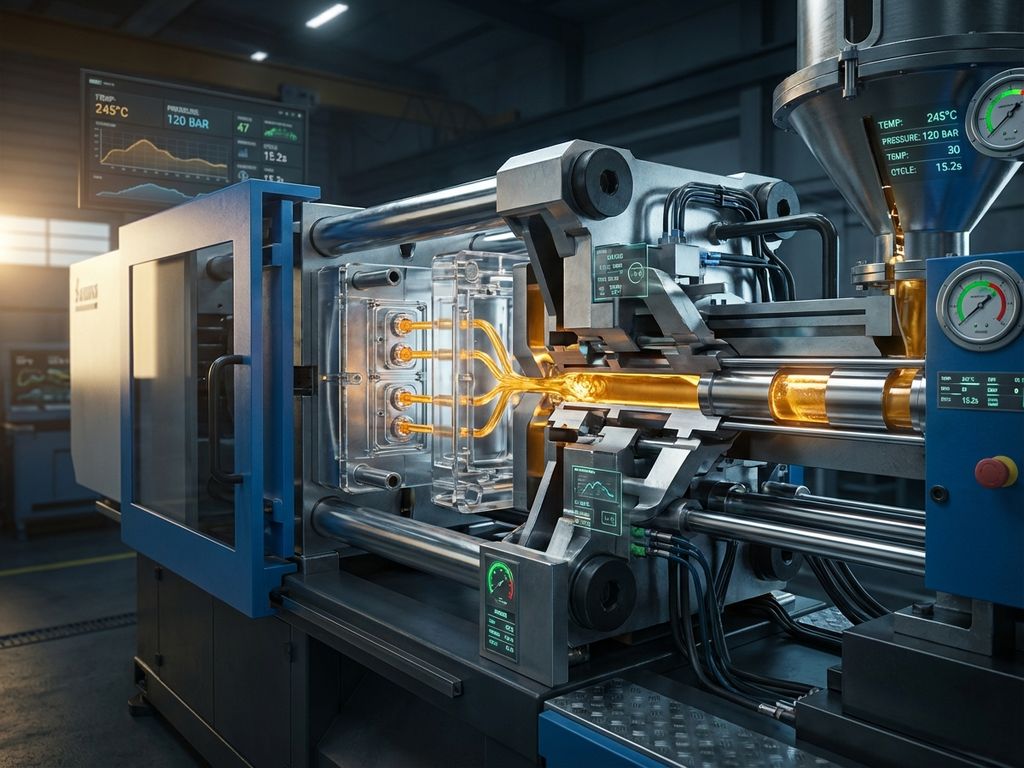
Injection molding optimization involves controlling critical parameters like temperature, pressure, speed, and timing to achieve consistent part quality while maximizing production efficiency. These interconnected variables directly impact dimensional accuracy, surface finish, and cycle times. Understanding how each parameter affects your molding process enables manufacturers to reduce defects, minimize waste, and optimize overall production performance.
What are the key parameters that control injection molding quality?
The four primary parameters controlling injection molding quality are temperature settings, pressure variables, injection speeds, and timing cycles. Temperature affects material flow and part formation, pressure ensures complete mold filling, speed influences material distribution, and timing controls cooling and cycle efficiency.
Temperature parameters include barrel temperature, mold temperature, and cooling temperature. Each zone requires precise control to maintain proper material viscosity and flow characteristics. Barrel temperatures must match material specifications to prevent degradation, while mold temperatures affect part quality and cooling rates.
Pressure variables encompass injection pressure, holding pressure, and back pressure. These work together to fill cavities completely, maintain part dimensions during cooling, and ensure consistent material density throughout each part.
Speed and timing parameters control injection velocity, fill rates, cooling time, and overall cycle duration. Proper speed profiles prevent shear heating and flow marks, while optimized timing balances part quality with production throughput requirements.
How do temperature settings affect injection molding optimization?
Temperature control is fundamental to injection molding optimization, affecting material flow, part quality, and cycle efficiency. Proper temperature management prevents defects like warping, incomplete fills, and surface imperfections while maintaining consistent part dimensions and material properties.
Barrel temperature zones must be set according to material specifications and part requirements. Higher temperatures improve flow but risk material degradation, while lower temperatures may cause incomplete filling or high injection pressures. Each heating zone should create a gradual temperature profile that maintains optimal viscosity.
Mold temperature significantly impacts part quality and cycle time. Higher mold temperatures improve surface finish and reduce internal stresses but extend cooling time. Lower temperatures speed production but may cause flow marks, weld lines, or dimensional variations in complex geometries.
Cooling temperature control affects part ejection timing and dimensional stability. Consistent cooling prevents warping and ensures parts maintain their intended shape. Proper cooling channel design and temperature control enable faster cycles while maintaining quality standards.
Why is injection pressure so critical for molding success?
Injection pressure ensures complete cavity filling and prevents common defects like short shots, sink marks, and dimensional inconsistencies. Proper pressure control maintains part quality by compensating for material shrinkage and ensuring uniform density throughout each molded component.
Injection pressure forces material through runners, gates, and into all cavity areas. Insufficient pressure causes incomplete fills, particularly in thin sections or complex geometries. Excessive pressure can create flash, increase wear on molds and machines, and cause part ejection difficulties.
Holding pressure maintains material flow during the cooling phase, compensating for shrinkage as the plastic solidifies. This secondary pressure prevents sink marks and maintains dimensional accuracy in thick sections where cooling occurs more slowly.
Back pressure controls material consistency in the barrel during the plasticizing phase. Proper back pressure ensures uniform melt quality, removes air bubbles, and maintains consistent shot weights. This parameter directly affects part-to-part consistency and overall quality.
What injection speeds and timing optimize production efficiency?
Optimized injection speeds and timing balance part quality with maximum production throughput by controlling fill rates, cooling duration, and overall cycle efficiency. Proper speed profiles prevent defects while timing optimization reduces cycle duration without compromising quality standards.
Injection speed profiles should match part geometry and material requirements. Fast initial speeds improve productivity, but excessive speeds cause shear heating, flow marks, and gate blush. Multi-stage speed profiles allow fast filling of thick sections while slowing for delicate features.
Fill time optimization considers material flow characteristics and cavity complexity. Shorter fill times increase productivity but may cause aesthetic defects. Longer fill times improve quality but reduce throughput. The optimal balance depends on part requirements and quality specifications.
Cooling time represents the largest portion of most injection molding cycles. Effective cooling optimization involves proper mold design, temperature control, and timing that ensures complete solidification without unnecessary delays. Advanced cooling strategies can significantly reduce cycle times.
How does mold design impact injection molding parameter optimization?
Mold design fundamentally determines parameter optimization possibilities by influencing material flow patterns, cooling efficiency, and processing requirements. Well-designed molds enable wider processing windows and more forgiving parameter settings, while poor designs create narrow operating ranges and quality challenges.
Gate design affects injection pressure requirements and fill patterns. Larger gates reduce pressure needs but may create aesthetic issues. Multiple gates can improve fill balance but require careful runner design. Gate location influences flow patterns, weld line placement, and overall part quality.
Runner system design impacts pressure losses and material waste. Hot runner systems eliminate waste and reduce cycle times but require precise temperature control. Cold runners are simpler but create material waste and longer cycles. Balanced runner systems ensure uniform filling across multiple cavities.
Venting design prevents air traps that cause burn marks, incomplete fills, and surface defects. Proper venting allows air displacement during filling while preventing material flash. Cooling channel layout affects temperature uniformity, cycle time, and part warpage control throughout the molding process.
How do EAS change systems help with injection molding optimization?
EAS change systems significantly enhance injection molding optimization by reducing mold changeover times from hours to minutes, enabling faster parameter adjustments and more efficient production transitions. Our quick mold change solutions eliminate lengthy setup procedures that traditionally hindered optimization efforts.
Our comprehensive systems provide:
- Adaptive clamping systems that ensure consistent mold positioning and reduce setup variability
- Automated coupling systems for hydraulic, electrical, and cooling connections
- Mold transportation and positioning equipment for safe, efficient changeovers
- Standardized mounting systems that eliminate alignment issues and setup errors
- Integrated safety features that protect operators and equipment during changeovers
These solutions enable manufacturers to optimize parameters more effectively by facilitating rapid mold changes for testing, reducing downtime between production runs, and maintaining consistent setup conditions. The reduced changeover times make smaller batch production economically viable while improving overall equipment effectiveness across various manufacturing applications.
Contact EAS change systems today to discover how our quick mold change solutions can transform your injection molding optimization process and dramatically improve your production efficiency.
