

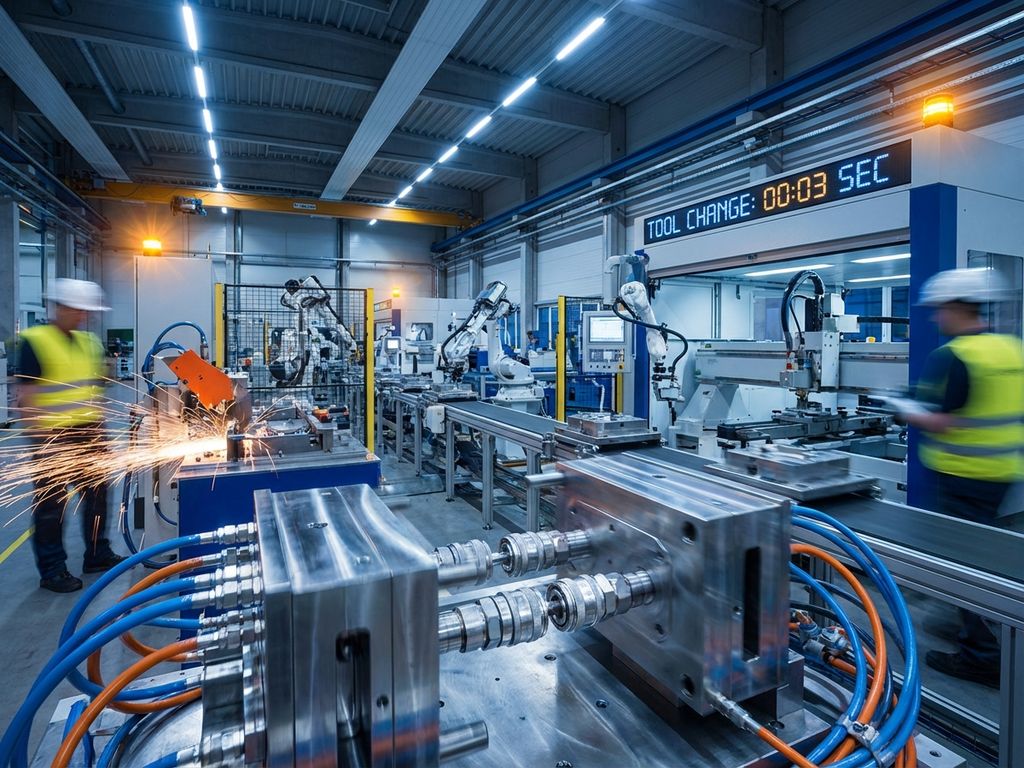
Reducing manufacturing cycle time involves streamlining all production phases from setup to completion. The most effective approaches include eliminating changeover delays, implementing lean manufacturing principles, and optimizing workflow design. Quick changeover technology, preventive maintenance, and systematic bottleneck identification can dramatically reduce cycle times while improving overall production efficiency.
What is manufacturing cycle time and why does it matter?
Manufacturing cycle time is the total duration required to complete one production cycle from start to finish. It encompasses four key components: setup time (preparing equipment and tools), processing time (actual production work), waiting time (delays between operations), and transport time (moving materials between workstations).
Reducing cycle time directly impacts your bottom line through improved competitiveness and cost reduction. Shorter cycle times enable faster responses to customer demands, reduce work-in-progress inventory, and increase equipment utilization rates. In today’s market, manufacturers with optimized cycle times can offer better delivery schedules while maintaining quality standards.
The benefits extend beyond immediate cost savings. Reduced cycle times improve cash flow by accelerating inventory turnover, enhance customer satisfaction through reliable delivery schedules, and create capacity for additional orders without capital investment in new equipment.
What are the biggest factors that increase manufacturing cycle time?
The primary cycle time killers include lengthy setup and changeover processes, which can consume hours of productive time between product runs. Equipment downtime from breakdowns or maintenance issues creates significant delays, while inefficient material handling systems slow the flow of components through production.
Quality issues requiring rework represent another major bottleneck, forcing products back through previous stages and disrupting scheduled workflows. Poor workflow design that creates unnecessary material movement, waiting periods, or redundant processes compounds these delays.
Additional factors include inadequate production planning that creates resource conflicts, insufficient operator training leading to slower task completion, and outdated equipment that operates below optimal speeds. Identifying these bottlenecks requires systematic analysis of each production stage.
How do you identify cycle time bottlenecks in your production process?
Effective bottleneck identification starts with comprehensive workflow analysis and timing each individual process step. Value stream mapping provides a visual representation of material and information flow, highlighting areas where delays commonly occur and revealing non-value-added activities.
Time studies offer detailed measurements of actual versus planned cycle times for each operation. Document setup times, processing durations, and waiting periods between stages. This data reveals patterns and identifies which processes consistently exceed expected timeframes.
Modern data collection tools and production monitoring systems can automatically track machine utilization, downtime events, and throughput rates. Regular production meetings where operators share observations about recurring delays provide valuable insights that data alone might miss.
What are the most effective strategies to reduce manufacturing cycle time?
Lean manufacturing principles form the foundation of effective cycle time reduction. Implementing standardized work procedures eliminates variation and ensures consistent performance across shifts. Single-Minute Exchange of Die (SMED) techniques can transform lengthy changeovers into rapid transitions.
Automation reduces processing times and eliminates human error, while preventive maintenance programs prevent unexpected breakdowns that disrupt production flow. Reducing production downtime through predictive maintenance and spare parts management maintains consistent throughput.
Continuous improvement methodologies like Kaizen encourage ongoing optimization. Cross-training operators increases flexibility and reduces delays when primary personnel are unavailable. Implementing pull systems rather than push systems reduces work-in-progress inventory and associated handling time.
How does quick changeover technology impact overall cycle time?
Quick changeover technology dramatically reduces setup times from hours to minutes, creating a multiplicative effect on total production efficiency. Rapid tool and mold change systems eliminate the need for complex manual adjustments and lengthy alignment procedures that traditionally consume significant production time.
The principles of Single-Minute Exchange of Die (SMED) focus on converting internal setup activities (performed while machines are stopped) into external activities (performed while machines run). This approach can reduce changeover times by 50–90% in many manufacturing applications.
The impact extends beyond immediate time savings. Faster changeovers enable smaller batch sizes, reducing inventory carrying costs and improving responsiveness to customer demands. Production scheduling becomes more flexible, and the fear of lengthy changeovers no longer drives inefficient long production runs of single products.
How EAS change systems help reduce manufacturing cycle time
Our quick mold change and quick die change solutions directly address the most significant cycle time challenges in manufacturing. Instead of changeovers taking hours, our automated changeover systems enable complete tool changes in minutes, dramatically improving production efficiency and reducing costly downtime.
Key benefits of our solutions include:
- Adaptive clamping systems that eliminate manual setup procedures
- Automated ejector couplers and multi-coupler systems for rapid connections
- Integrated mold change tables and transportation vehicles for seamless workflow
- Comprehensive project management and installation support
- Measurable ROI through production downtime reduction and increased throughput
Our turnkey automation solutions address the entire changeover process, not just individual components. This comprehensive approach ensures maximum cycle time reduction while maintaining quality and safety standards. Contact us today to discover how our proven quick change technology can transform your manufacturing efficiency and reduce cycle times across your production operations.
